 EN
 jp
 ko
 fr
 de
 es
 it
 ru
 pt
 ar
 vi
 th
 nl
Whole House Design
You can trust .


Choosing furniture board materials sounds like a small decision until a shipment lands in a humid coastal climate and panels start warping within a year. For developers, contractors, and hospitality procurement teams sourcing cabinetry at scale, this choice can affect project costs, long-term durability, and client satisfaction well beyond installation. This guide breaks down how to match board materials to project conditions before signing off on a supplier.
A single board specification cannot serve every residential project because climate, budget, and usage intensity vary too widely between them. A villa in a tropical coastal region faces different stress than a mid-rise apartment in a temperate city. Therefore, treating board selection as a checkbox rather than a variable leads to premature failures and costly rework.
Five factors typically decide which board fits a given project:
Climate and humidity levels at the installation site
Project positioning (economy, mid-range, or luxury residential)
Budget per unit, especially across multi-unit developments
Usage environment (kitchen versus wardrobe versus living space)
Environmental protection requirements set by the destination market
Skipping this assessment is the most common reason projects need warranty claims or replacements within the first two years.
A substrate suited to coastal or high-humidity climates needs low water-absorption expansion, strong deformation resistance, and a documented environmental rating. Because moisture is the primary cause of board swelling and delamination, this matters more than surface finish in these regions. For example, cabinetry installed in humid coastal apartments will fail faster if the core board lacks moisture resistance, regardless of how the exterior looks.
Adhesive chemistry plays a bigger role here than many buyers expect. Boards bonded with MDI ecological adhesive form chemical rather than purely physical bonds with wood fiber, which raises internal bond strength and moisture resistance at the core level — one reason NAF (no-added-formaldehyde) boards built on MDI glue are increasingly specified for humid markets.
Moisture resistance is typically measured through a water-absorption expansion rate test, where a board sample is submerged for a set period and checked for thickness swelling. A lower expansion percentage indicates better resistance to warping in damp conditions. As a reference point, SNIMAY’s MDI-bonded NAF board tests at a thickness swelling rate of 0.6% or below, far under the 8.0% ceiling in China’s national standard. Deformation resistance, meanwhile, is often assessed through an elongation test, which measures how much a board stretches or bends under sustained load before losing structural integrity. Buyers sourcing for humid markets should ask suppliers for these test figures directly rather than relying on general moisture-resistant labeling.
Climate Condition | Priority Board Property | Why It Matters |
Coastal / high humidity | Low water-absorption expansion rate | Prevents swelling and joint separation |
Frequent temperature swings | Deformation resistance | Reduces warping and door misalignment |
Year-round tropical humidity | Documented moisture-resistant rating | Extends usable lifespan indoors |
As a result, projects in these regions should treat moisture performance as a non-negotiable specification, not an upgrade option.
Mid-to-high-end residential projects should prioritize overall substrate quality, including texture, nail-holding power, and elongation resistance, after meeting the required level of environmental protection. For buyers in this segment, the goal is not only to prevent failures but also to deliver a design experience that meets the expectations of their end clients for years to come. Because these projects carry a higher finish standard, weak nail-holding capacity or visible deformation becomes a visible defect rather than a hidden one.
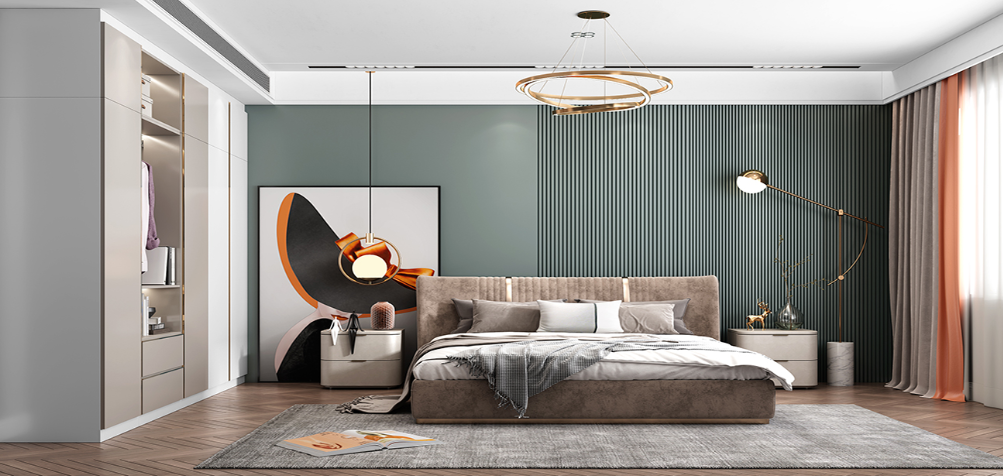
Environmental certifications provide evidence that a board meets specified emission or sourcing requirements, but they do not determine its mechanical performance or long-term durability. Nail-holding power determines whether cabinet hinges and hardware stay securely fastened over years of opening and closing, so a board that meets emission standards but has weak core density can still fail structurally. Texture consistency matters just as much on higher-end projects, because visible grain irregularities or surface inconsistencies are immediately noticeable against premium finishes and fittings. In other words, certification protects indoor air quality, while texture and nail-holding power protect the product's working life and appearance — a mid-to-high-end project needs both, not one in place of the other.
Buyers evaluating suppliers for this tier should ask for:
Documented load-bearing capacity for countertops and shelving
Nail-holding power test results, not just marketing claims
Sample boards to check texture consistency across production batches
Overseas residential projects should verify the formaldehyde emission and sourcing standards required by their destination market before finalizing a board specification, since these requirements are not interchangeable. A board compliant for one country’s market may fall short of another’s threshold. For instance, boards intended for the US market are commonly measured against California Air Resources Board (CARB) Phase 2 formaldehyde emission limits, which the US Environmental Protection Agency (EPA) has since aligned with under TSCA Title VI.
Standard Type | Common Focus | Typical Relevance |
Formaldehyde emission grading (e.g., E0/ENF tiers under GB/T 39600-2021) | Indoor air safety | Required by many residential building codes; ENF (≤0.025 mg/m³) is the strictest tier |
CARB Phase 2 / EPA TSCA Title VI | Composite wood formaldehyde limits | Common benchmark for US-bound shipments |
Forest sourcing certification (e.g., FSC) | Timber origin traceability | Increasingly requested by developers and hotel brands |
Because requirements shift by destination, buyers should confirm current documentation directly with their supplier rather than assuming one certificate covers every market.
SNIMAY approaches board selection as a matching exercise between market, climate, and project brief rather than offering one fixed panel size to every customer. This section outlines what that looks like in practice.
SNIMAY is an authorized strategic partner of Wanhua Hexiang Group in China, producing its NAF (no-added-formaldehyde) Gaojing board with Wanhua’s MDI ecological adhesive instead of traditional urea-formaldehyde resin — no formaldehyde-containing substances are added during substrate production. In third-party testing against GB/T 39600-2021, the board’s formaldehyde emission returned a “not detected” result (detection limit 0.006 mg/m³), qualifying it for China’s strictest ENF grade (≤0.025 mg/m³), a threshold roughly twice as tight as the CARB-NAF benchmark familiar to US buyers. The same MDI chemistry delivers the 0.6%-or-below thickness swelling rate cited above, which is why this board is SNIMAY’s default recommendation for humid and coastal projects.
For projects with premium specifications, imported board lines meeting Japan’s F4-star standard are also available. Core specifications include 18mm cabinet panels and 9mm backboards, with thicker panel options for worktops and other load-bearing surfaces.
Through its whole house solution in China, SNIMAY has delivered cabinetry and furniture packages to residential and hospitality projects spanning humid coastal markets, temperate regions, and tropical climates alike. Its global project portfolio covers villas, apartments, and hotels across more than 20 markets in Asia, the Middle East, Africa, Australia, and North America — recent deliveries range from villa developments in Cambodia and the United States to a whole-house showroom project in Dubai. Material specification is adjusted per destination rather than standardized across every shipment.
Behind this sits three intelligent manufacturing bases in Guangzhou, Jingmen, and Guiyang, running German HOMAG production lines with MES-driven scheduling, so that climate-specific material choices can be produced at multi-unit scale without losing batch consistency.
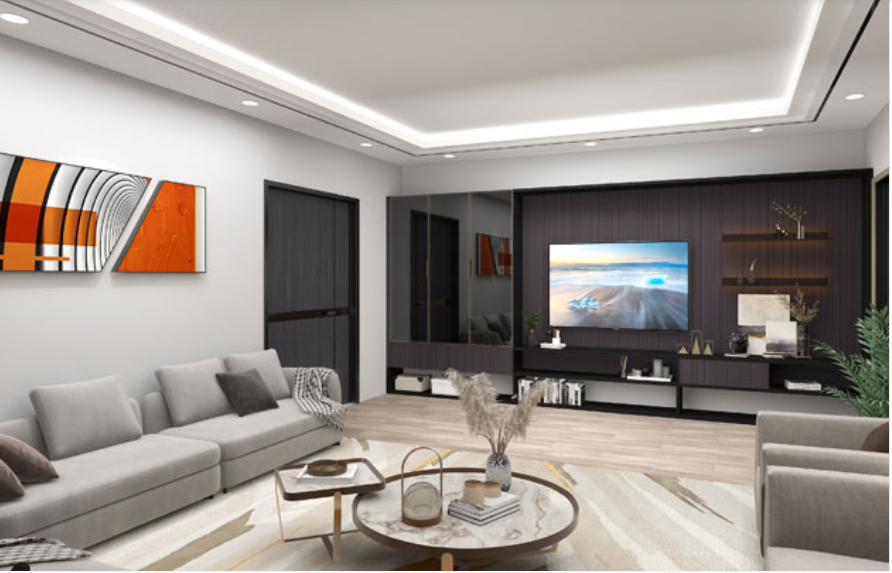
SNIMAY projects follow a structured process that includes jobsite measurement, a budget-matched design proposal, and multi-stage quality control — incoming material inspection, in-process checks, and finished-product verification under documented enterprise standards, backed by third-party testing through nationally accredited (CMA/CNAS) laboratories. A typical project timeline from initial quotation to the start of installation runs about four to six months, covering sample-room production, consolidated safe shipment, and customs clearance. Delivery includes a choice of local installation, SNIMAY’s own installation service, or a DIY guide. Cabinetry carries a 5-year warranty, with select hardware covered for up to 5 years.
Board selection should start with the project’s climate, positioning, and target market, not with a default catalog choice. Buyers who assess moisture exposure, quality tier, and destination compliance requirements upfront avoid the cost of mid-project material failures. Suppliers offering documented certifications and climate-specific matching, rather than one-size-fits-all panels, are worth prioritizing during sourcing conversations for the next residential development.
 Call us on:
 Email Us:
 Snimay Headquarters, Building 6, Panyu E Valley, Panyu District, Guangzhou City, Guangdong Province, China